How Colorado Became Ground Zero in America’s Culture Wars
Colorado has become the Mordor of anti-Christian values in the American Republic. That statement may sound harsh but consider the record.
In less than a decade, Colorado has been rebuked by the United States Supreme Court in four major constitutional cases addressing religious liberty, free speech, and the limits of government power:
• Masterpiece Cakeshop v. Colorado Civil Rights Commission (2018)
• 303 Creative LLC v. Elenis (2023)
• Trump v. Anderson (2024)
• Chiles v. Salazar (2026)
Different issues. Different plaintiffs. Different facts. Yet the outcome was remarkably similar.
In each case, the Supreme Court concluded that Colorado had exceeded constitutional limits. The message from the Court has been clear: Government power has limits, even when pursuing popular political objectives.
Today, Colorado finds itself at the center of nearly every major cultural and moral battle confronting America.
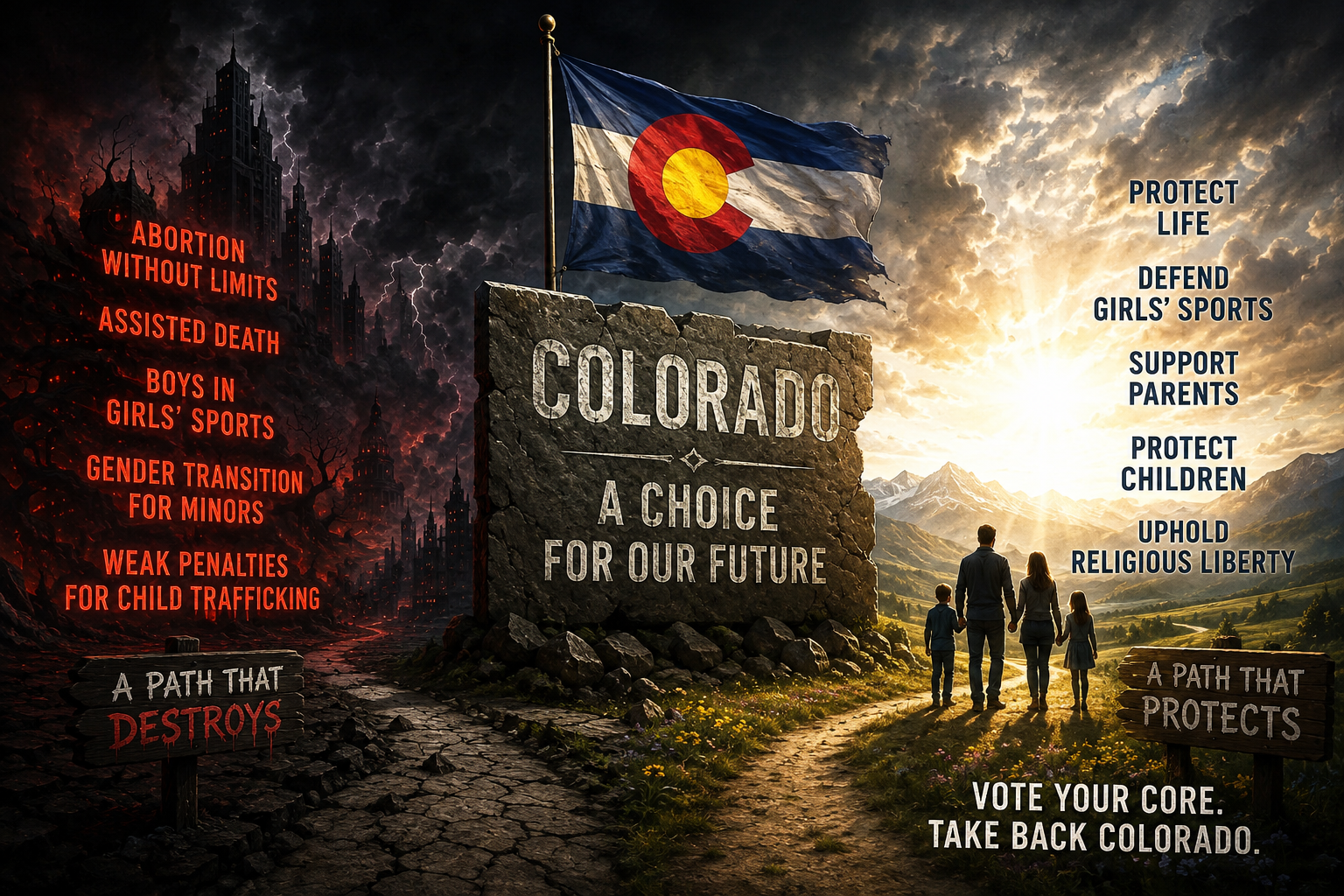
ABORTION WITHOUT GESTATIONAL LIMITS
Under current Colorado law, abortion is legal throughout pregnancy. There is no gestational age limit.
Colorado law and the Colorado Constitution recognize a right to abortion and do not prohibit the procedure at 15 weeks, 22 weeks, viability, or at any other stage of pregnancy.
Colorado now represents one of the most permissive abortion regimes in the nation.
ASSISTED DEATH
Colorado also permits physician-assisted suicide through the Colorado End-of-Life Options Act.
Under the law, terminally ill adults who meet specific requirements may obtain a prescription for life-ending medication and self-administer it.
GIRLS’ SPORTS AND FEMALE SPACES
Colorado has also become ground zero in the national debate over biological sex and gender identity.
One of the most frequently cited examples involves Jefferson County Public Schools.
In 2026, the U.S. Department of Education’s Office for Civil Rights concluded that Jefferson County violated Title IX by allowing biological males to participate in girls’ sports and access female bathrooms, locker rooms, and overnight accommodations.
The controversy reflects a broader statewide policy environment in which athletic participation has often been based on gender identity rather than biological sex.
CHILD SEX TRAFFICKING
Colorado has faced criticism over penalties related to the commercial sexual exploitation of children.
In response, lawmakers passed Senate Bill 26-015, increasing penalties and imposing mandatory prison sentences for many offenses involving commercial sexual activity with minors. For key Class 3 felony offenses, the minimum sentence is “generally” four years in the Colorado Department of Corrections.
Even after these reforms, CatholicVote, Protect Kids Colorado, and Colorado’s Catholic bishops continue to support stronger penalties, including life imprisonment without parole for trafficking a child for sexual servitude.
MINORS CAN RECEIVE GENDER-TRANSITION TREATMENTS
Colorado currently has no statewide prohibition on gender-transition surgeries for minors and protects access to puberty blockers and cross-sex hormones for children.
In May 2026, the Colorado Supreme Court ordered Children’s Hospital Colorado to resume providing puberty blockers and hormone therapy to minors after those treatments had been paused.
THE SUPREME COURT’S REBUKES
Colorado’s policy debates would be noteworthy on their own. What makes them more significant is the state’s repeated defeats before the Supreme Court.
In Masterpiece Cakeshop, the Court found Colorado officials displayed hostility toward a Christian baker’s religious beliefs.
In 303 Creative, the Court ruled Colorado could not compel a Christian designer to create speech celebrating same-sex marriage.
In Trump v. Anderson, the Court unanimously rejected Colorado’s attempt to remove a presidential candidate from the ballot under the Fourteenth Amendment.
Most recently, in Chiles v. Salazar, the Court ruled that Colorado violated the First Amendment by restricting voluntary counseling conversations based on viewpoint.
Four cases.
Four losses.
One recurring theme: The Constitution still matters.
A CHOICE FOR COLORADO
That is why many faith-based organizations, parents, and grassroots activists are mobilizing across Colorado.
In 2026, Protect Kids Colorado successfully placed three major initiatives on the ballot:
• Stronger protections against child sex trafficking
• Protection of girls’ sports and locker rooms
• Restrictions on irreversible gender-transition procedures for minors
According to organizers, more than 500,000 signatures were collected across the three initiatives. The effort received strong support from Colorado’s Catholic bishops, CatholicVote, and numerous parent advocacy organizations.
Whether one agrees with every proposal or not, the movement reflects a growing concern that Colorado has drifted dangerously far from the values that once shaped both the state and the nation.
The November election will determine whether Colorado continues down its current path or begins charting a different course—one that respects and cherishes the dignity of life, the protection of children, parental rights, religious liberty, and constitutional freedoms.
The choice belongs to the people of Colorado.
Sources:
• U.S. Supreme Court opinions:
• Masterpiece Cakeshop v. Colorado Civil Rights Commission (2018)
• 303 Creative LLC v. Elenis (2023)
• Trump v. Anderson (2024)
• Chiles v. Salazar (2026)
• Colorado End-of-Life Options Act
• Colorado Constitution Amendment 79 and Colorado abortion statutes
• Colorado Senate Bill 26-015 (Commercial Sexual Activity with a Child Offenses)
• U.S. Department of Education Office for Civil Rights findings regarding Jefferson County Public Schools (2026)
• CatholicVote communications regarding Protect Kids Colorado and the 2026 ballot initiatives
• Colorado Catholic Conference and Colorado bishops’ public statements supporting Initiatives 108, 109, and 110