Saint Ephrem reminds us that not every battle is won by force. Some are won through patience, service, truth, and the quiet perseverance of a faithful life.
He shows that cultures are transformed not only by political leaders and armies but also by teachers, writers, and faithful Christians willing to defend truth in confusing times.
Saint Ephrem the Syrian exemplifies courage in defending truth amid periods of confusion, division, and cultural upheaval. Unlike many famous saints, Ephrem was never a priest or a bishop. He remained a deacon throughout his life.
For many Christians today, his life may feel surprisingly relevant.
A Leader During Crisis
Born around 306 AD in Nisibis (modern-day southeastern Turkey near the Syrian border), Ephrem endured wars, famine, political upheaval, conflicts between the Roman and Persian Empires, theological debates, heresies, persecution, and uncertainty about Christian doctrine.
When Persian forces captured Nisibis, Ephrem became a refugee, losing his home, community, and much of the world he knew. Yet he continued to teach, write, and serve others.
During a famine in Edessa, he organized relief efforts and cared for the sick and poor. Rather than retreating from the crisis, he stepped into it.
At the same time, Christians were deeply divided over fundamental questions concerning Christ, the Trinity, and Church authority. Ephrem spent his life defending Christian doctrine against confusion and error.
His extraordinary holiness, theological wisdom, and enduring contributions to Christian teaching eventually led the Catholic Church to recognize him as a Doctor of the Church.
What He Can Teach Us Today
Ephrem understood something many leaders overlook: people are often influenced more by stories, music, and culture than by arguments alone. Rather than focusing solely on theological treatises, he wrote hymns, poems, prayers, biblical commentaries, and teaching songs. He used beauty to communicate truth. Many historians regard him as one of the greatest Christian poets of all time. He recognized that songs, stories, education, and language shape hearts and minds more deeply than many realize.
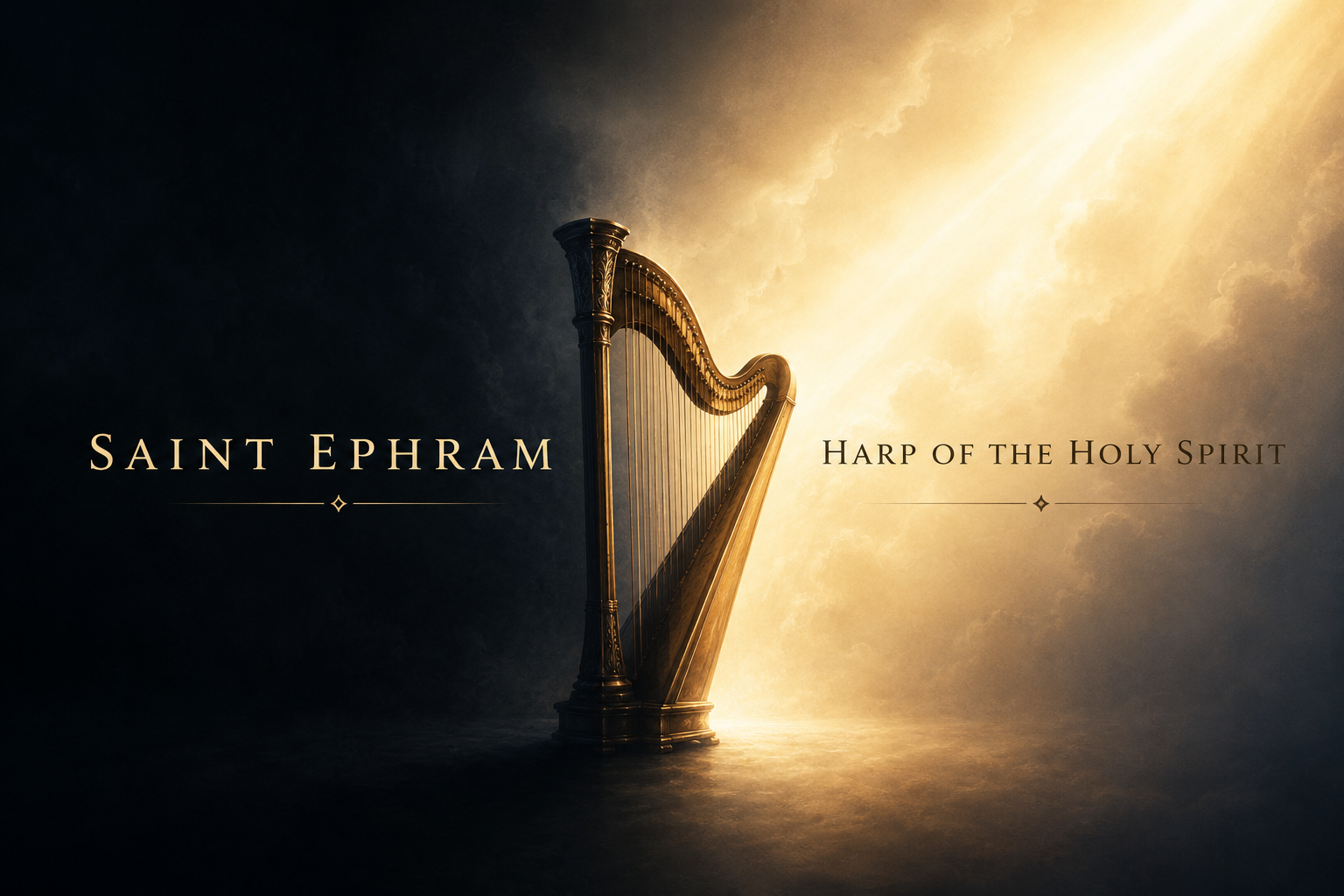
Saint Ephrem became known as the “Harp of the Holy Spirit” for using poetry and music to proclaim and defend the Christian faith. Just as a harp produces beautiful melodies in the hands of a skilled musician, Ephrem’s hymns and writings were seen as instruments through which the Holy Spirit taught, inspired, and strengthened believers.
Leadership Lessons from Saint Ephrem
- Truth Matters
- Culture Shapes Belief
- Humility Is Strength
- Serve During Crisis
- Use Your Gifts
His response to the challenges of his time was not retreat. It was to teach the truth, live faithfully, serve others, and trust God.
As Saint Ephrem prayed: “O Lord and Master of my life, take from me the spirit of sloth, despair, lust of power, and idle talk. But give rather the spirit of chastity, humility, patience, and love.”
Nearly 1,700 years later, Saint Ephrem reminds us that some of the most important battles are fought not with swords but with truth, compassion, and faithful witness.