The State of New York Continues Its Efforts to Drive Religious Organizations Out of Existence
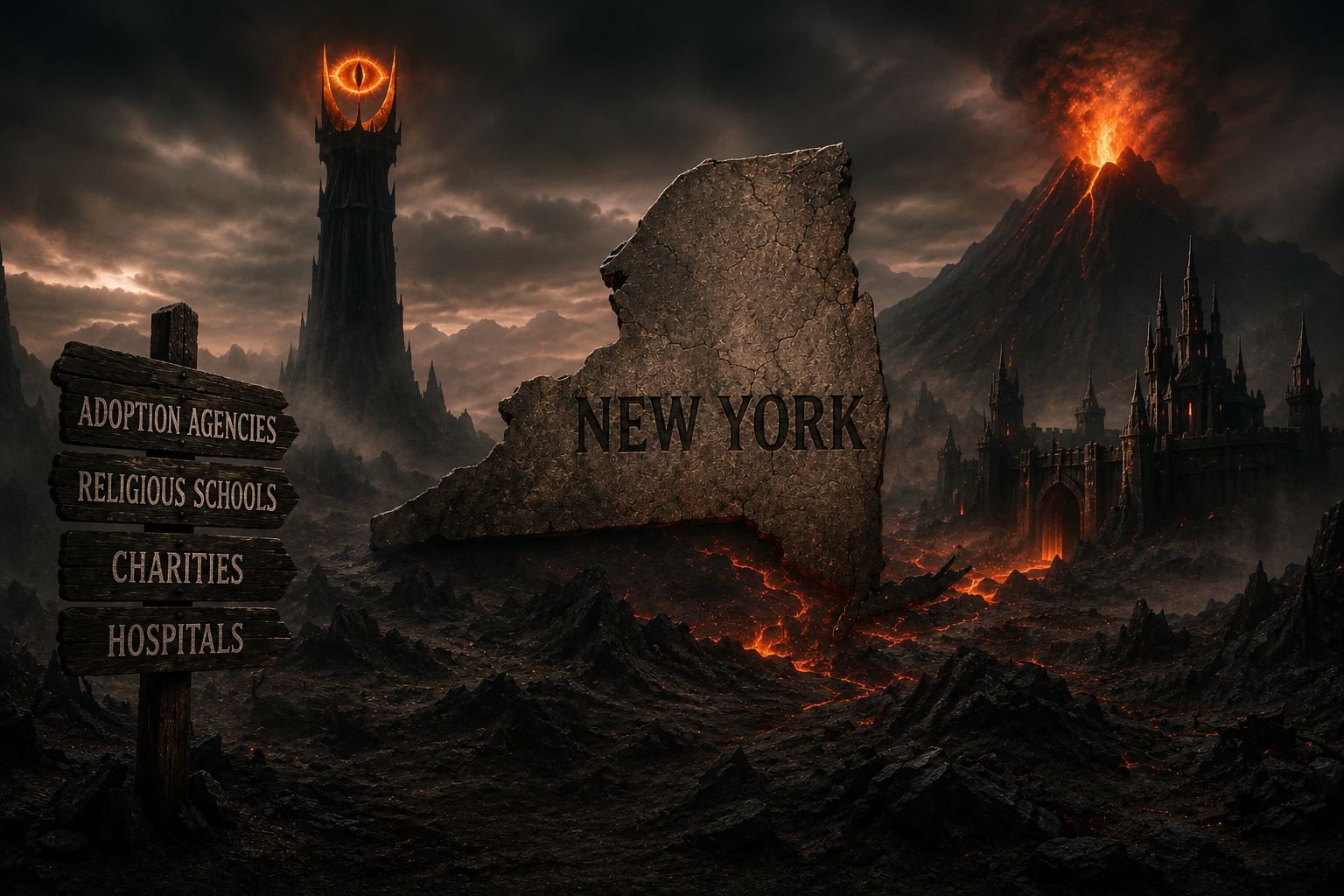
When the government forces nuns, adoption agencies, and religious schools to choose between their faith and their mission, everyone loses. New York has increasingly treated religious conviction as a problem to be regulated rather than a freedom to be protected. In doing so, it risks driving out many of the organizations that have spent generations caring for the poor, the sick, and the vulnerable. That’s not progress. It’s a loss for every New Yorker.
The Dominican Sisters are New York’s most recent target.
For more than 125 years, the Dominican Sisters of Hawthorne have provided free palliative care to indigent cancer patients through Rosary Hill Home in Hawthorne, New York. In 2026, the Sisters sued the State of New York after regulations required licensed nursing facilities to accommodate residents based on gender identity in areas such as room assignments and related policies. The Sisters argue that complying with these requirements would violate their Catholic faith and could ultimately force them to close a ministry that has served the dying poor since 1900.
“New York’s law would force these religious women to choose between their faith and their license if they wish to continue serving the dying.” — Harmeet K. Dhillon, Assistant Attorney General (2026)
New Hope Family Services (2018–2022)
New Hope Family Services, a Christian adoption agency in Syracuse founded in 1965, came under scrutiny in 2018 when New York informed the agency that it must place children with unmarried and same-sex couples or risk losing its license. Rather than abandon its religious beliefs, the ministry filed a federal lawsuit. After several years of litigation, New York settled the case in 2022, allowing New Hope to continue serving children and families while operating according to its Christian convictions.
Yeshiva University (2021–2025)
Yeshiva University, one of the nation’s leading Jewish universities, became the center of a major religious liberty dispute when New York courts ordered it to recognize an LGBTQ student organization under the city’s Human Rights Law. The university argued that the mandate conflicted with its religious identity and mission. The case reached the U.S. Supreme Court before the parties reached a settlement in 2025 that allowed the university to recognize a student organization structured in a manner consistent with its religious mission.
Catholic Charities of New York (2002–2006)
Following passage of New York’s Women’s Health and Wellness Act in 2002, Catholic Charities challenged the state’s requirement that many employer health insurance plans include prescription contraceptive coverage. The organization argued that the mandate infringed upon its religious beliefs. New York’s highest court upheld the law in 2004, and in 2006 the U.S. Supreme Court declined to hear the appeal, allowing the mandate to remain in effect.
Catholic Hospitals and Conscience Protections (2019–Present)
Since 2019, Catholic hospitals and health care systems across New York have continued to raise objections to various state requirements involving reproductive services and gender-transition-related care. These institutions maintain that certain mandates conflict with the Ethical and Religious Directives for Catholic Health Care Services and threaten long-standing conscience protections. While these disputes have taken different legal forms, they reflect an ongoing tension between state regulatory authority and the religious freedom of faith-based health care providers.
In June 2026, the U.S. Department of Justice notified the U.S. District Court that it intended to intervene in the lawsuit filed by the Dominican Sisters of Hawthorne against the State of New York. The DOJ argued that New York’s law, which requires the Sisters’ residential hospice to house biological men with women based on gender identity, violates the constitutional rights of religious organizations.
What a difference it makes who occupies the White House. After the DOJ intervened, Mother Marie Edward Deutsch said:
“We are grateful the Department of Justice sees the injustice in this matter. This gives us hope that the country’s founding principles are still strong after 250 years.”
Practicing Christians should recognize that elections shape far more than tax policy or the economy. They determine who enforces our laws, appoints our judges, and decides whether the federal government stands with or against religious liberty. The current Department of Justice chose to defend the Dominican Sisters. Christians should carefully consider these differences when they vote.
Elections have consequences. The current DOJ chose to stand with the Dominican Sisters and defend religious liberty. Based on the Biden administration’s legal positions in numerous cases involving gender identity and religious liberty, it is reasonable to believe it would have approached this dispute very differently.
Wake up, New York, and take back your state.