Modern leadership rewards speed.
Quarterly results. Strategic initiatives. Performance metrics. Immediate outcomes.
Yet some of the most important leadership investments take years to bear fruit.
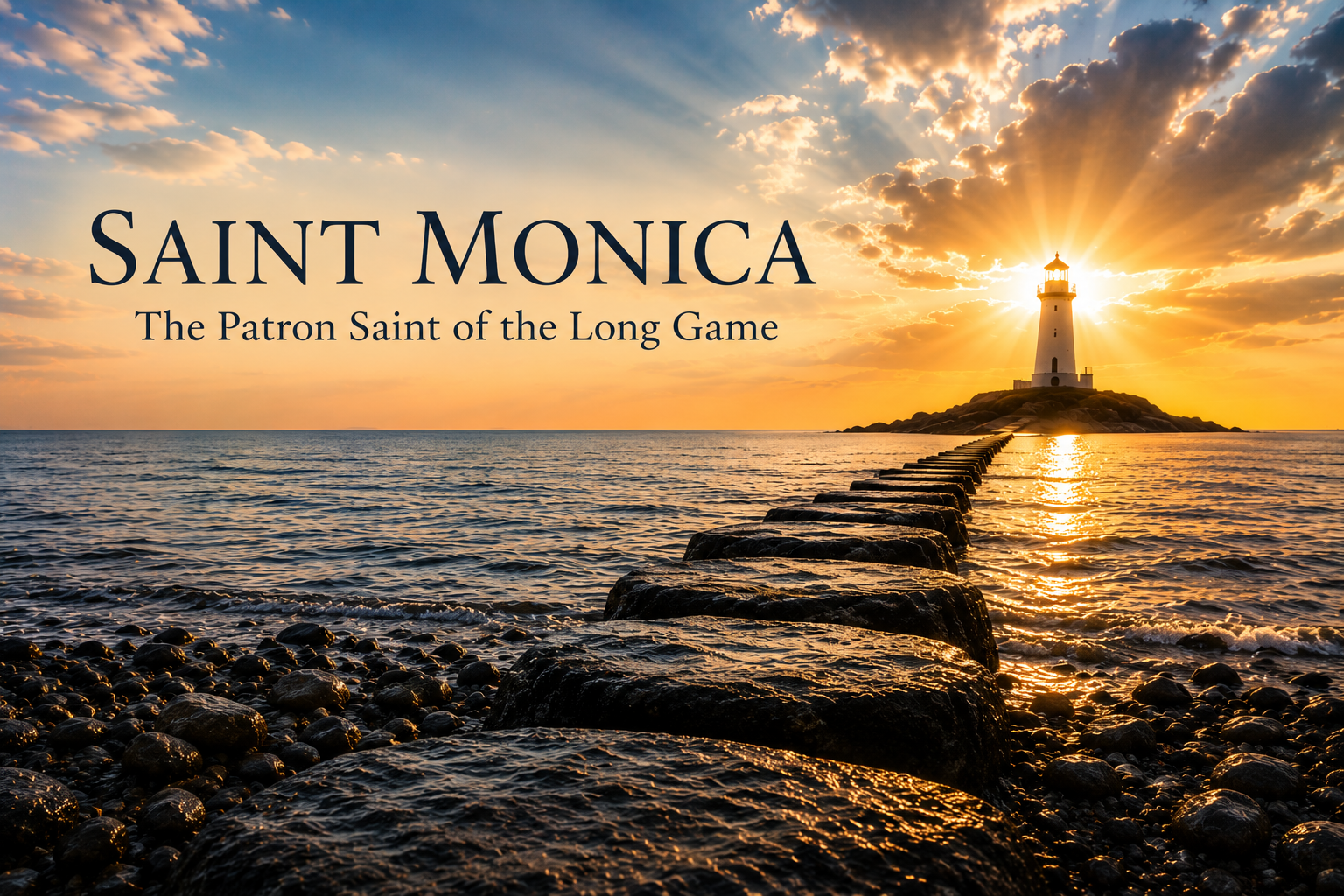
Saint Monica understood that reality better than most executives.
She spent years investing in someone she could influence but could not control. She remained committed to her mission without any guarantee that her efforts would succeed.
That’s a powerful lesson for leaders today. For me personally, it prompts some uncomfortable reflection. Looking back, there were times when I was too quick to judge results, too quick to move on, and not patient enough to allow growth and transformation to unfold over time.
The Woman Behind the Lesson
Monica was born around 331 in North Africa, in what is now Algeria. Raised as a Christian, she married Patricius, a pagan known for his difficult temperament. Together they had three children, including a brilliant and ambitious son named Augustine.
Augustine eventually rejected the faith of his childhood and pursued other philosophical and religious ideas while building a successful career as a teacher of rhetoric.
Most parents would understand the temptation to give up.
“I’m done. He’s an adult. The decision is his.”
Monica chose a different path.
She prayed.
She encouraged.
She challenged.
She stayed engaged.
Most importantly, she refused to abandon hope.
For years, she continued investing in her son while lacking the power to force the outcome she desired.
Influence Is Not Control
This may be Monica’s most important leadership lesson.
She desperately wanted Augustine to change.
But she couldn’t make him change.
She could offer guidance.
She could set an example.
She could remain present.
She could pray and persevere.
But Augustine had to make his own decision.
Great leaders learn the same lesson.
We can mentor employees, coach team members, develop future leaders, and build strong cultures. We can create opportunities for growth.
But we cannot force character, commitment, or wisdom.
Leadership is ultimately about influence, not control.
Weak leaders attempt to control people.
Strong leaders create conditions in which people can grow.
The Long Game
Eventually Augustine encountered Bishop Ambrose in Milan. His objections began to fall away, and after a long internal struggle he embraced Christianity.
In 387, at age 32, Augustine was baptized.
Monica lived to see her son return to the faith.
What she did not live to see was even more remarkable.
She did not see him become a priest.
She did not see him become Bishop of Hippo.
She did not see him write Confessions or The City of God.
She never knew that history would remember him as Saint Augustine, one of the most influential theologians and philosophers in Western civilization.
Monica died shortly after his conversion.
Which leads to another profound leadership lesson:
You may never see the full impact of your investment in others.
Five Leadership Lessons from Saint Monica
- Play the Long Game
Important transformations often take years. Don’t confuse slow progress with no progress.
- Persistence Is Not Passivity
Monica did not mistake patience for inactivity. She sought wisdom, engaged difficult conversations, remained present, and continued to act.
Waiting and working are not opposites.
- Know What You Can Control
Monica couldn’t control Augustine’s decisions.
She could control her own actions, example, perseverance, and response.
Leaders waste enormous energy trying to control outcomes that belong to someone else.
- Don’t Write People Off Too Soon
If you had evaluated Augustine at age 20, you likely would have missed the person he would become.
Great leaders see potential before it is fully visible.
- Plant Trees Whose Shade You May Never Sit Under
The most meaningful leadership investments often produce results long after the leader is gone.
Leadership is not merely about what you accomplish.
It’s also about what continues because you were there.
Why Saint Monica Still Matters
Catholics honor Monica not because she was the mother of a saint, but because she became a saint through her own faithfulness, perseverance, courage, and trust in God.
Her story reminds us that some of our most important work happens beyond our ability to measure, accelerate, or control.
Modern leadership celebrates speed.
Saint Monica teaches endurance.
Most leaders will never fully know the impact of the people they mentor, encourage, or develop.
Monica certainly didn’t.
Yet her faithfulness helped shape one of history’s most influential Christian thinkers.
Perhaps the most important leadership question is not whether people are changing as quickly as we would like.
It’s whether we have the patience to keep investing in them anyway.
Who have you written off because their potential is taking longer to emerge than you expected?