Introduction
Over the past thirty years, Venezuela has experienced one of the most serious national declines in modern Latin American history. Once one of the region’s wealthiest oil-producing countries, Venezuela slid into political repression, economic collapse, mass emigration, and accusations of state-linked criminal activity. By the mid-2020s, these issues led to unprecedented international action aimed at removing what critics called a criminalized regime rather than a legitimate government.
This article explores the political, economic, humanitarian, and legal path that moved Venezuela from prosperity to crisis—and why many now believe that regime change was not only justified but also overdue.
1. Political Transformation: From Democratic Stability to Authoritarian Rule
The Pre-1998 Order: Decline of the Punto Fijo System
For four decades, Venezuela operated under the Punto Fijo system—a power-sharing arrangement among major parties that provided stability but ultimately led to corruption, patronage, and economic mismanagement. By the mid-1990s, public trust had collapsed amid inflation, debt, and growing inequality, paving the way for populist revolt.
Hugo Chávez (1999–2013): The Bolivarian Shift
Elected in 1998, Hugo Chávez initiated the “Bolivarian Revolution,” rewriting the constitution and consolidating authority under the executive branch. While early oil revenues supported social programs, Chávez increasingly subjugated courts, the legislature, and electoral institutions to political control—weakening democratic checks and balances.
Nicolás Maduro (2013–2026): Institutional Collapse
Following Chávez’s death, Nicolás Maduro inherited a fragile system and sped up its decline. Elections were heavily disputed, opposition leaders imprisoned or disqualified, and the separation of powers was effectively erased. In 2019, the National Assembly declared Maduro’s presidency illegitimate and appointed Juan Guaidó as interim president—recognized by many governments, although Maduro’s security forces still held control.
2. Economic Collapse and Humanitarian Breakdown
Oil Dependence and Economic Mismanagement
Despite having the world’s largest proven oil reserves, Venezuela failed to diversify its economy. Nationalization, corruption, and underinvestment hampered production. As oil revenues declined, the government turned to monetary expansion, leading to a historic collapse.
Hyperinflation and Shortages
Between 2013 and 2020, Venezuela’s economy shrank by about 75–80 percent. Hyperinflation made wages meaningless. Food, medicine, and basic goods vanished from shelves, forcing families into survival mode and destroying the middle class.
Mass Migration
The result was one of the world’s biggest displacement crises: more than seven million Venezuelans fled the country—about one-fifth of the population—straining institutions and splitting families across the region.
3. Human Rights and the Erosion of the Rule of Law
International organizations reported widespread abuses by Venezuelan security forces, including arbitrary detention, torture, and extrajudicial killings. Investigations by the United Nations and groups like Human Rights Watch found there are reasonable grounds to believe crimes against humanity took place.
Freedom of expression eroded, political opposition was criminalized, and courts served as tools of the executive—turning the state from a defender of rights into a device of repressionFrom
4. Corruption to Criminal Governance: Narco-Terrorism Allegations
The Cartel of the Suns
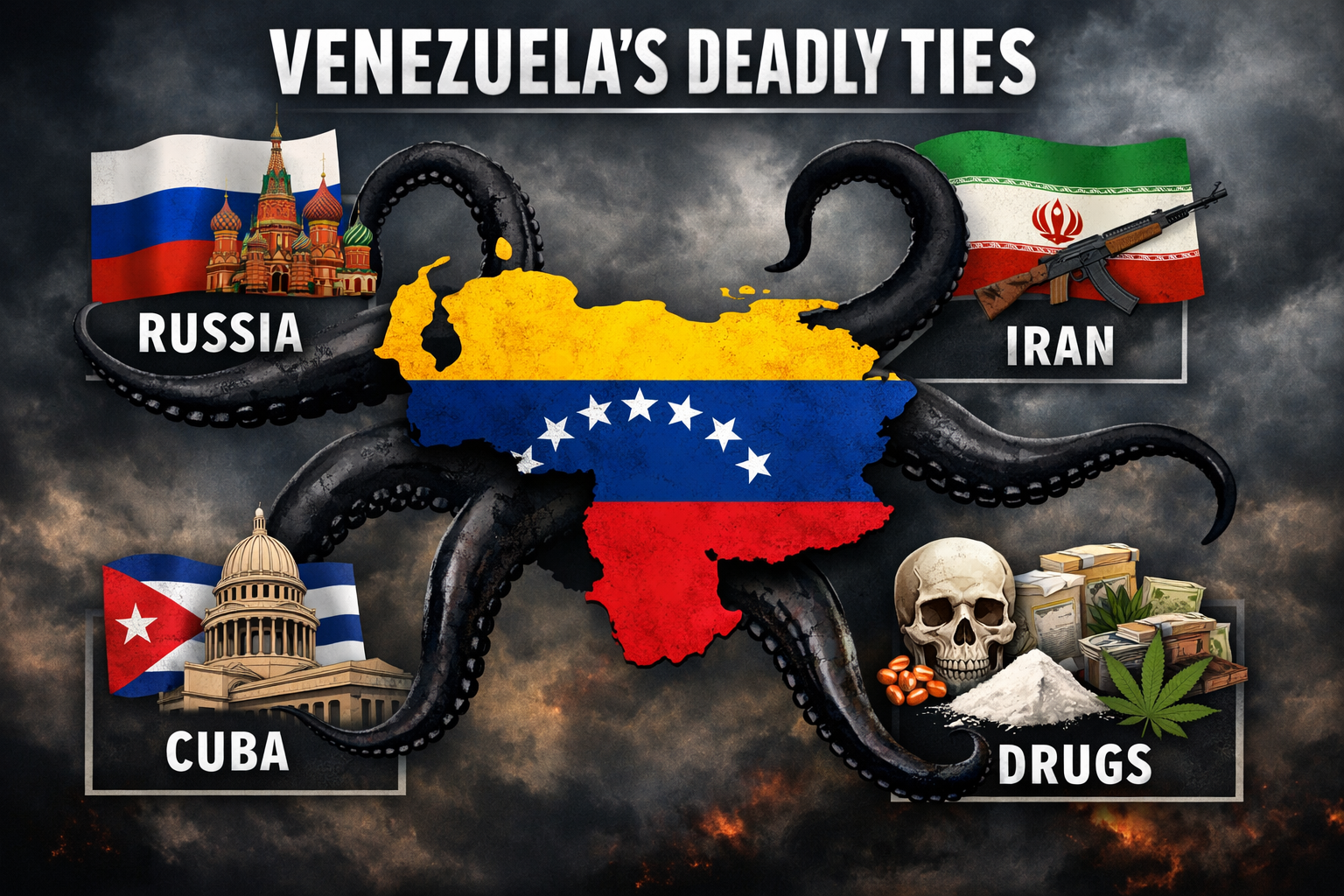
In March 2020, the U.S. Department of Justice unsealed indictments accusing Maduro and senior officials of running a state-linked drug trafficking organization known as the Cartel of the Suns. Prosecutors claimed cooperation with the FARC and major cartels to smuggle cocaine through Venezuela with state protection.
In 2025, U.S. authorities officially classified the network as a Foreign Terrorist Organization, citing transnational drug trafficking and violence.
Criminal Charges Against Maduro
Maduro was charged in U.S. courts with narco-terrorism conspiracy, cocaine trafficking, and weapons offenses. The indictments claimed the use of military, intelligence, and diplomatic infrastructure to support international drug operations over many years.
5. The 2026 U.S. Operation: Disrupting a Criminal Regime
Operation and Rationale
In January 2026, the United States carried out a high-risk military operation targeting the Maduro regime’s leadership. U.S. officials presented the action not as a typical regime change but as a law-enforcement intervention against a government accused of functioning as a criminal enterprise.
Casualties and International Reaction
Reports on casualties varied, with no confirmed U.S. fatalities and disputed claims from Venezuelan and allied governments. International reactions were divided: China and Russia condemned the action, while others highlighted the unprecedented use of force against a regime under active criminal indictment.
Immediate Political Aftermath
After Maduro was removed from power, Vice President Delcy Rodríguez took over temporarily with support from other state institutions. Issues about legitimacy, rebuilding, and international supervision still need to be resolved.
6. The Human Cost: Life Under State Failure
For ordinary Venezuelans, the past three decades translated into daily hardship:
- Economic deprivation: wages destroyed by inflation
- Food and medical scarcity: preventable illness and malnutrition
- Insecurity: crime and political repression
- Infrastructure collapse: unreliable power, water, and fuel
- Family separation: millions forced into exile
These conditions were not the result of a natural disaster, but of prolonged institutional failure and criminalized governance.
7. International Legal Context
Although Venezuela has never been officially designated as a U.S. State Sponsor of Terrorism, multiple governments and organizations have referred its situation to the International Criminal Court, which continues to investigate alleged crimes against humanity dating back to 2018.
Conclusion
Venezuela’s collapse was neither sudden nor accidental. It resulted from years of democratic decline, economic mismanagement, and the transformation of the state into a tool for repression and organized crime. By 2026, the question facing the international community was no longer whether Venezuela’s government was legitimate—but whether allowing it to continue amounted to tolerating a narco-terrorist state.
From this perspective, the recent intervention did not mark the start of instability but represented a break from years of impunity—and a key moment in Venezuela’s ongoing fight to restore sovereignty, dignity, and the rule of law.
Sources:
- S. Department of Justice
Narco-terrorism indictments against Nicolás Maduro and senior officials (March 2020); criminal conspiracy filings. - S. Department of State
Sanctions, terrorism designations, rewards programs, and official statements on Venezuela. - Congressional Research Service
Nonpartisan reports on Venezuela’s political legitimacy, economy, and U.S. policy options. - Drug Enforcement Administration
Assessments of the Cartel of the Suns and regional drug trafficking routes. - United Nations Human Rights Council
Independent International Fact-Finding Mission on Venezuela (crimes against humanity findings). - International Criminal Court
Ongoing examination of alleged crimes against humanity in Venezuela. - UN High Commissioner for Refugees (UNHCR)
Authoritative data on Venezuelan displacement and migration. - World Bank
GDP collapse, poverty, and development indicators. - International Monetary Fund
Inflation, macroeconomic contraction, and fiscal assessments. - Human Rights Watch
Documentation of repression, political prisoners, and state violence. - Amnesty International
Civil liberties, arbitrary detention, and security-force abuses. - Inter-American Commission on Human Rights
Regional legal findings and human-rights assessments. - Reuters
Primary reporting on indictments, Russia/Iran ties, economic collapse, and the 2026 U.S. operation. - Associated Press
Independent coverage of political legitimacy, migration, and post-operation developments. - The Washington Post
Geopolitical, legal, and international-law analysis. - CBS News
S. government statements and operational reporting. - Fox News
S. policy framing and executive-branch statements. - Center for Strategic and International Studies (CSIS)
Russia, Iran, and Cuba influence in Venezuela and Latin America.