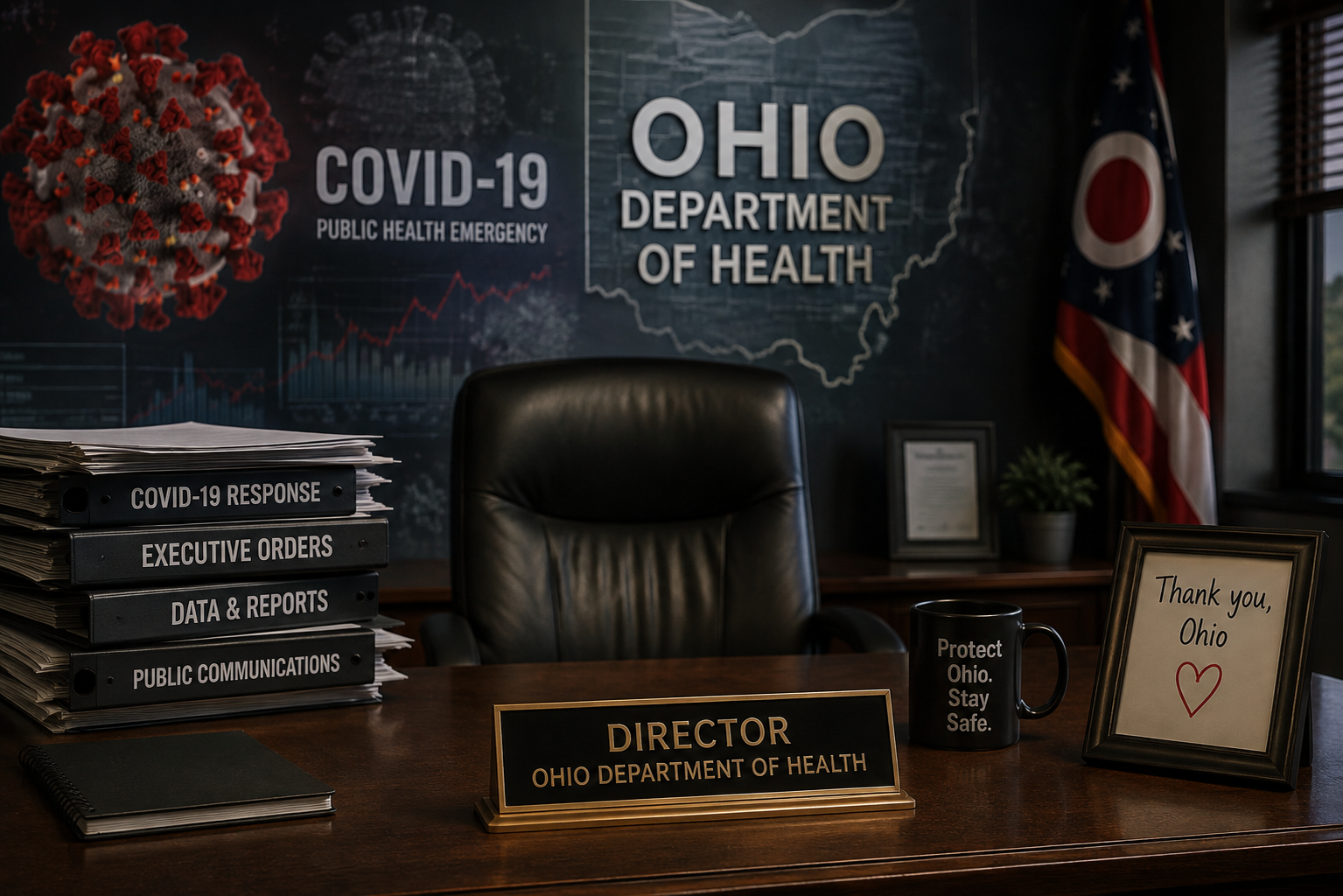
Dr. Amy Acton’s tenure as Director of the Ohio Department of Health is frequently presented as the centerpiece of her executive experience.
That makes the circumstances surrounding her departure during COVID-19 relevant as Ohioans evaluate her candidacy for governor.
Acton became one of the most recognizable figures in Ohio during the early months of the pandemic. Along with Governor Mike DeWine, she helped lead an aggressive response that included business closures, restrictions on gatherings and a statewide stay-at-home order. Those decisions earned her considerable praise—but also intense criticism.
Then Acton Resigned
On June 11, 2020—while COVID remained an active statewide crisis—Acton resigned as Ohio’s health director after approximately 16 months in the position.
Why This Matters to Me
I don’t raise this to diminish the difficulty of what Acton faced. COVID presented government leaders with circumstances few had ever experienced.
I raise it because leadership under pressure is part of the job of governor.
Governors face criticism. They face lawsuits. Legislatures challenge them. Courts sometimes reject their policies. Protesters demonstrate against them. The media scrutinizes their decisions. And during genuine emergencies, the pressure can become enormous.
Acton’s campaign understandably points to COVID as evidence of her leadership experience.
But if we’re going to count those months as an important qualification for becoming governor, I believe voters are also entitled to examine how that leadership assignment ended.
She left the operational command of the Ohio Department of Health while the crisis was still underway.
There is solid evidence that Acton favored keeping restrictions in place longer than many Ohio political leaders wanted. On April 30, 2020, she signed a new modified stay-at-home order extending restrictions through May 29, even as portions of Ohio’s economy were beginning a phased reopening. Political pressure was moving strongly in the opposite direction: DeWine accelerated reopening during April, and on May 19 he lifted the remaining stay-at-home requirement before Acton’s May 29 expiration date.
I’m also concerned about Amy Acton’s record as Director of the Ohio Department of Health. She resigned during the COVID crisis because she believed the restrictions should have remained in place longer. To me, that reflects a leadership style that struggled to balance competing priorities such as public health, the economy, education, and individual liberty.
Leadership requires difficult tradeoffs. Based on her record, I don’t believe Amy Acton is the best choice to serve as Ohio’s next governor.
That doesn’t prove she was incapable of handling pressure. But it is part of the record.
My Standard for Governor
I want Ohio’s next governor to have demonstrated the ability to make difficult decisions, accept responsibility for them, withstand criticism, adjust when necessary, and continue leading when circumstances become difficult.
That’s especially important because the governor isn’t responsible for one specialized department. The governor is ultimately responsible for an executive branch encompassing public safety, transportation, corrections, Medicaid, economic development, emergency management and numerous other state functions.
For me, therefore, Acton’s COVID experience raises the question: Does her decision to leave that position during the crisis tell us about her readiness for the much larger pressures of being governor?
Ohio voters should examine both.
Vote for policy, experience and results—not personality.
References
• WOSU / Statehouse News Bureau, June 11, 2020 — Acton resignation, COVID orders, legislative opposition and protests.
• ABC News, June 11, 2020 — resignation, court challenges, protests and transition to chief health adviser.
• Health Policy Institute of Ohio, June 12, 2020 — DeWine had asked Acton to remain; transition to chief health adviser.
• WOSU, August 4, 2020 — Acton’s subsequent departure as DeWine’s chief health adviser.