The famous sacrifice at Auschwitz was not the beginning of his leadership story. It was the culmination of a lifetime spent building, serving, innovating, and leading others.
Most people know the ending of Maximilian Kolbe’s story.
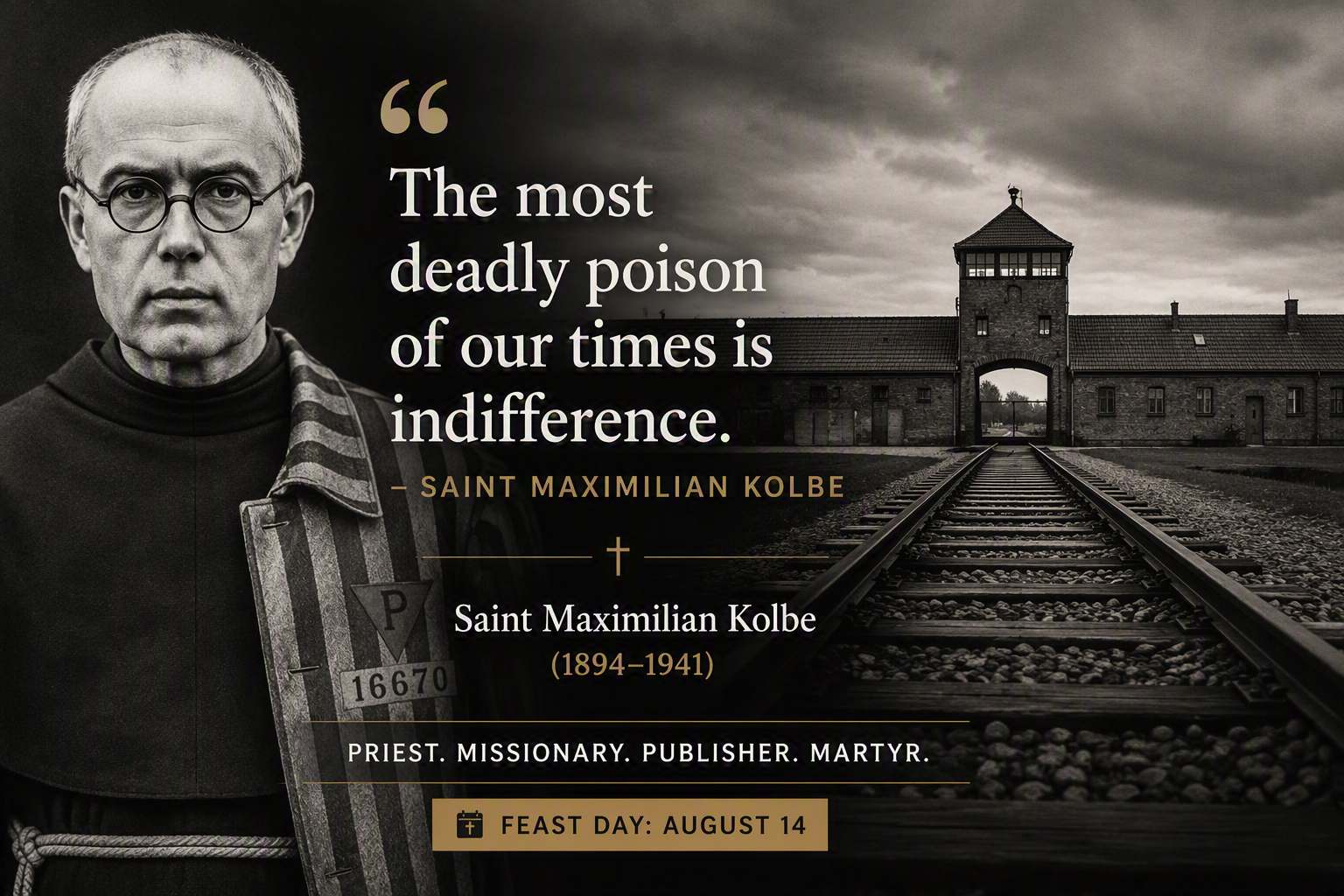
At Auschwitz in 1941, he voluntarily took the place of another prisoner who had been selected to die by starvation. After more than two weeks without food or water, Kolbe was still alive. On August 14, 1941, Nazi guards ended his life with an injection of carbolic acid.
Before he became known around the world for that act of sacrifice, however, Maximilian Kolbe had already spent decades demonstrating a different kind of leadership.
He was a priest, missionary, entrepreneur, publisher, organizational leader, early adopter of technology, and gifted communicator. He built institutions, inspired people around a shared mission, and embraced innovation in service of a purpose greater than himself.
Then history placed him in circumstances that would test everything he had spent his life teaching.
That’s an extraordinary story of servant leadership in itself.
But for business leaders, nonprofit executives, pastors, educators, and anyone responsible for influencing others, the more surprising story may be what Kolbe accomplished before Auschwitz.
By 1938, his magazine Knight of the Immaculate had reached approximately one million copies. He founded Niepokalanów, which grew into a major religious publishing center. He later traveled to Japan and established another mission and publishing operation there. Pope Paul VI would later describe Kolbe as having led the largest publishing complex in Poland.
The leadership lessons are remarkable.
Mission Creates Extraordinary Organizations
- Kolbe’s work was never centered on making Maximilian Kolbe famous.
- People understood why the organization existed. The mission was clear, compelling, and larger than any individual.
- Organizations achieve extraordinary things when people rally around a shared purpose rather than a shared personality.
Embrace Technology
- Kolbe recognized the power of modern printing and mass communication long before many religious leaders did.
- Rather than fearing new technology, he used it aggressively and creatively to advance his mission.
- Effective leaders understand that new tools are neither inherently good nor bad. Their value depends on how they are used.
Build Beyond Yourself
- Great leaders build organizations that can survive without them.
- Kolbe established institutions in both Poland and Japan, creating structures that extended far beyond his personal presence.
- Leadership is not measured by how indispensable you become. It is measured by how effectively others can continue the mission after you are gone.
Innovation and Faith Are Not Opposites
- Too often, people assume tradition and innovation are competing values.
- Kolbe demonstrated the opposite. He remained firmly rooted in his faith while enthusiastically adopting new methods to serve others.
- Strong principles and creative thinking often work best together.
Culture Reveals Itself During Crisis
- Every organization has values printed on websites, painted on walls, and included in mission statements.
- The real question is what happens when those values become costly.
- Whether leading a company, nonprofit, parish, or family, leaders eventually face moments when doing the right thing carries a personal price.
- Crisis exposes the gap between what we claim to believe and what we actually believe. That leads to perhaps the most important leadership lesson of all: You don’t suddenly become a servant leader during a crisis. Crisis reveals whether you were one all along.
Maximilian Kolbe was one of approximately 1.1 million people murdered at Auschwitz by Nazi Germany. About one million of those victims were Jews, making Auschwitz the largest single site of mass murder in the Holocaust. Other victims included non-Jewish Poles, Roma, Soviet prisoners of war, and prisoners of many other nationalities and groups.
In a place deliberately designed to strip human beings of their dignity, Kolbe made an extraordinary choice. He freely surrendered his own life so another prisoner could live.
His final sacrifice was not an exception to the life he had lived.
It was the ultimate expression of it.
Pope John Paul II described what occurred at Auschwitz as a victory of faith and love carried to its ultimate conclusion. Kolbe’s courage in August 1941 did not emerge in a single moment. It was the result of decades of daily choices, faithful service, and unwavering commitment to others.
The lesson of Auschwitz is not only remembrance, although remembrance remains essential.
It is also the recognition that character is formed long before it is tested.
Kolbe’s life reminds us that leadership is not ultimately defined by authority, position, or achievement. It is revealed when conviction demands sacrifice. As we mark his feast day on August 14, his example reminds us that character is formed long before it is tested.
We honor his witness by remembering both the life he lived and the choice he made.
We must never forget.
Sources
- Auschwitz-Birkenau Memorial and Museum — Maximilian Kolbe — imprisonment, prisoner no. 16670, starvation bunker, and death at Auschwitz.
- Vatican — Canonization Homily of St. Maximilian Kolbe, Pope John Paul II — Kolbe’s sacrifice, martyrdom, and canonization.
- Vatican News — St. Maximilian Kolbe: Martyr of Supreme Sacrifice — accessible biography covering his priesthood, missionary work, publishing apostolate, and martyrdom.
- Auschwitz-Birkenau Memorial — Victims of Auschwitz — approximately 1.1 million people murdered at Auschwitz, about 1 million of them Jews.